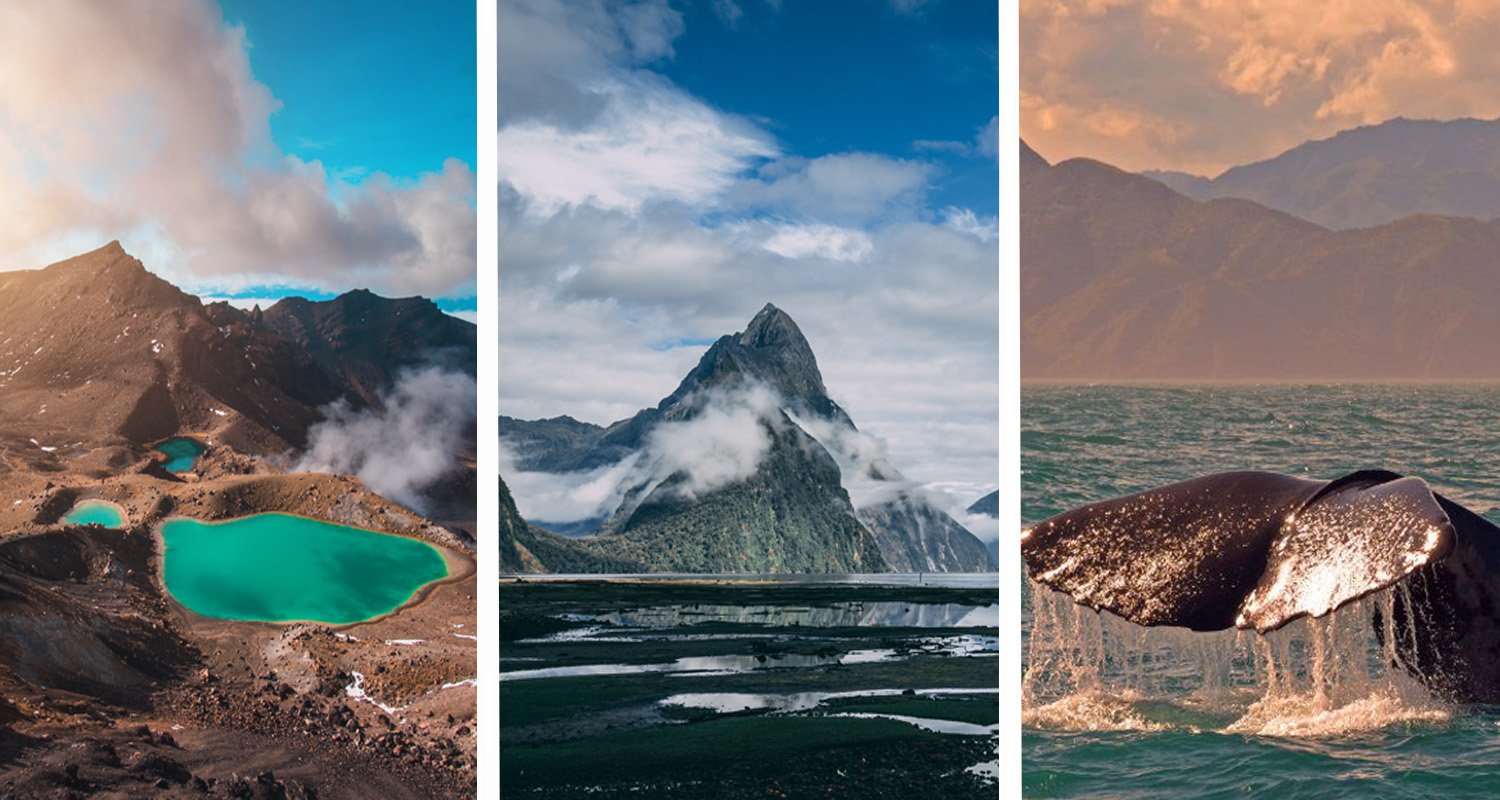

Planning a New Zealand 2 week itinerary can be surprisingly difficult. New Zealand looks compact on a map, but mountain roads, winding highways and the distance between major regions can make a “quick” journey take much longer than expected. NZ Transport Agency Waka Kotahi specifically warns international visitors that travel times are often longer than they appear on a map and that many roads are narrow, winding and steep.
 For a complete overview before planning your trip, read our guide on first time visiting New Zealand.
For first-time visitors, the best approach is not to try to see everything. Instead, this 2 week New Zealand itinerary for first time visitors combines a manageable selection of North and South Island highlights:
Auckland → Rotorua → Taupō → Wellington → Christchurch → Aoraki/Mt Cook → Queenstown → Milford Sound
The itinerary gives you a taste of New Zealand’s cities, Māori culture, geothermal landscapes, volcanic scenery, Southern Alps and Fiordland.
It is an active itinerary, but it avoids turning the entire holiday into one long road trip.
At a glance: Spend 2 nights in Auckland, 2 in Rotorua, 1 in Taupō, 2 in Wellington, 1 in Christchurch, 2 around Aoraki/Mt Cook, and 3 in Queenstown. Fly between Wellington and Christchurch rather than attempting to drive the entire length of the country.
Your 14-Day New Zealand Itinerary at a Glance
| Day | Overnight | Main plan | Transport |
|---|---|---|---|
| 1 | Auckland | Arrive and explore central Auckland | Airport transfer/car |
| 2 | Auckland | Auckland sightseeing | Walk/public transport |
| 3 | Rotorua | Travel to Rotorua, geothermal attractions | Drive |
| 4 | Rotorua | Māori culture + geothermal Rotorua | Car/tours |
| 5 | Taupō | Rotorua to Taupō | Drive |
| 6 | Wellington | Taupō to Wellington | Drive |
| 7 | Wellington | Explore Wellington | Walk/public transport |
| 8 | Christchurch | Fly Wellington to Christchurch | Domestic flight |
| 9 | Christchurch | Explore Christchurch | Walk/car |
| 10 | Aoraki/Mt Cook | Drive to Aoraki/Mt Cook | Drive |
| 11 | Aoraki/Mt Cook | National park and lake scenery | Car/walking |
| 12 | Queenstown | Drive to Queenstown | Drive |
| 13 | Queenstown | Milford Sound day trip | Tour/drive |
| 14 | Queenstown | Queenstown + departure | Airport |
This is a framework rather than a rigid schedule. Flight times, attraction availability, weather and your international arrival time may require small adjustments.
Before You Start: How to Make Two Weeks Work
A two-week holiday sounds long, but New Zealand rewards travellers who leave room for travel.
Tourism New Zealand currently groups itineraries into 8–14-day trips and offers routes covering either island or both islands, which illustrates how much variety can fit into this timeframe.
Why this route uses both islands
If this is your first visit, seeing both islands gives you a broad introduction to New Zealand.
The North Island section focuses on:
- Auckland
- Māori culture
- Rotorua’s geothermal attractions
- Lake Taupō
- Wellington
The South Island section focuses on:
- Christchurch
- Aoraki/Mt Cook
- Southern Alps scenery
- Queenstown
- Milford Sound/Piopiotahi
The compromise is that you will not explore any one region deeply. If you prefer slow travel, hiking or beaches, a one-island itinerary may be better.
Why fly between Wellington and Christchurch?
Driving between the islands is possible, but it consumes valuable time. You would need to account for the journey to the ferry, the Cook Strait crossing and the onward drive after arriving in Picton.
For a 14-day first visit, a domestic flight makes the itinerary easier to manage.
Beginner tip: Consider using separate rental cars for each island rather than keeping one car throughout the trip. This can make the itinerary simpler, especially when combined with a domestic flight.
Days 1–2: Auckland
Day 1 — Arrive in Auckland
Start gently.
After a long international flight, resist the temptation to immediately drive several hours into the countryside. Auckland is a useful first stop because it gives you time to recover from jet lag while introducing you to New Zealand.
Depending on your arrival time, spend the afternoon exploring the central city, waterfront and nearby neighbourhoods.
Good first-day options include:
- Viaduct Harbour
- Wynyard Quarter
- Auckland waterfront
- Auckland Domain
- Mount Eden/Maungawhau
- A relaxed dinner in the central city
If your flight arrives late, simply treat Day 1 as an arrival and recovery day.
Where to stay
For a first visit, staying centrally makes the beginning of the trip easier. You can walk to restaurants and attractions rather than immediately relying on a rental car.
If you plan to rent a car, consider collecting it when you leave Auckland rather than paying for a vehicle while it sits unused in the city.
Day 2 — Explore Auckland
Use your second day for Auckland’s major sights.
A simple plan is:
Morning: Mount Eden/Maungawhau or Auckland Domain
Afternoon: Waterfront and central Auckland
Evening: Dinner in the city
You could also use the day for a harbour cruise, museum visit or another attraction that matches your interests.
Don’t over-plan Auckland
A common itinerary mistake is filling the first two days with too many attractions before the traveller has adjusted to the time zone.
Think of Auckland as the comfortable starting point rather than the main reason for the entire trip.
Days 3–4: Rotorua
Day 3 — Auckland to Rotorua
Pick up your rental car and drive south toward Rotorua.
Rotorua is one of the most useful stops on a first New Zealand itinerary because it introduces visitors to two things that are difficult to experience elsewhere in the same way: geothermal landscapes and Māori culture.
Depending on your schedule, stop somewhere along the way rather than treating the drive as a race.
Once in Rotorua, spend the evening relaxing around the town and lakefront.
Overnight: Rotorua
Two nights are worthwhile because arriving late and immediately leaving the next morning would reduce the destination to a transit stop.
Day 4 — Rotorua geothermal and cultural experiences
Dedicate the day to Rotorua.
Possible experiences include:
- Geothermal parks
- Māori cultural experiences
- Redwood forest walks
- Lake Rotorua
- Geothermal pools and spa experiences
- Local food
You do not need to visit every geothermal attraction. Choose one major geothermal experience and leave time for something else.
A useful beginner rule
If an attraction requires most of the day, check whether it duplicates something you already plan to see elsewhere.
The goal of this itinerary is variety, not collecting as many attractions as possible.
Day 5: Rotorua to Taupō
Add Lake Taupō without losing a full day
Drive from Rotorua to Taupō.
Taupō works particularly well as an overnight stop because it breaks up the journey toward Wellington while giving you a completely different landscape.
Lake Taupō dominates the area, with volcanic scenery and mountains visible in the distance.
Spend the afternoon around the lakefront or choose an activity such as:
- Huka Falls
- Lake Taupō cruise
- Short nature walk
- Scenic viewpoint
- Local food and cafés
Why only one night?
For a first-time two-week itinerary, Taupō is being used as a scenic overnight stop, not as a deep exploration of the region.
If you love hiking, fishing, boating or volcanic landscapes, consider moving one night from Auckland or Wellington to Taupō.
Days 6–7: Wellington
Day 6 — Taupō to Wellington
Continue south toward Wellington.
This is one of the longer driving days in the itinerary, so avoid adding too many major attractions along the way.
Arrive in Wellington and spend the evening exploring the waterfront or central city.
Overnight: Wellington
Wellington is compact enough to explore without constantly moving your vehicle.
Day 7 — Wellington
Use your full Wellington day for the city.
A strong first-time plan could include:
- Te Papa Tongarewa Museum of New Zealand
- Wellington waterfront
- Cable car
- Botanic Garden
- Cuba Street
- Wellington’s food scene
Allow yourself time to wander rather than scheduling every hour.
Why Wellington deserves two nights
Wellington provides an important contrast to the natural scenery elsewhere in the itinerary. It is a good place to experience museums, food, arts and New Zealand’s capital-city atmosphere before flying to the South Island.
Day 8: Wellington to Christchurch
Fly to the South Island
This is your major transition day.
Return your rental car in Wellington and take a domestic flight to Christchurch.
Once you arrive, settle into your accommodation and explore the central city if you have time.
Christchurch is a practical gateway to the South Island’s mountain and alpine regions. ChristchurchNZ describes the city as a gateway to Canterbury and highlights its range of attractions, markets, food and outdoor experiences.
Why not take the ferry?
The Cook Strait ferry is a memorable way to travel and can be excellent on a longer itinerary. But with only two weeks, flying is generally the more time-efficient choice.
If the ferry journey itself is important to you, replace the Wellington-to-Christchurch flight with a ferry crossing to Picton and redesign the South Island section around Marlborough, Nelson or Kaikōura.
Do not try to keep every stop in the itinerary while also adding the ferry.
Day 9: Christchurch
Explore Christchurch before heading into the mountains
Give Christchurch one full day rather than immediately driving onward.
Depending on your interests, explore:
- Christchurch Botanic Gardens
- Avon River area
- Riverside Market
- Central Christchurch
- Port Hills
- Local museums and galleries
Christchurch’s central attractions make it a useful reset day before the alpine portion of the trip.
Alternative: Skip the overnight
If your international arrival and domestic flight schedule work well, experienced travellers could reduce Christchurch to one evening and drive toward Aoraki/Mt Cook the next morning.
For first-time visitors, however, keeping the overnight makes the trip less rushed.
Days 10–11: Aoraki/Mt Cook
Day 10 — Christchurch to Aoraki/Mt Cook
Pick up your South Island rental car and head toward Aoraki/Mt Cook National Park.
This is one of the most scenic driving sections of the itinerary. The landscape changes dramatically as you move toward the Southern Alps.
Allow plenty of time for stops.
Once you reach the Aoraki/Mt Cook area, keep the evening simple. If conditions are clear, enjoy the mountain scenery and prepare for a full outdoor day.
Overnight: Aoraki/Mt Cook area
Staying near the national park is worthwhile because it gives you more time in the landscape and reduces the need for a long return drive.
Day 11 — Explore Aoraki/Mt Cook
Use the day for walking and sightseeing.
Choose a walk appropriate to your fitness, weather and experience rather than automatically selecting the longest or most famous route.
Possible options include:
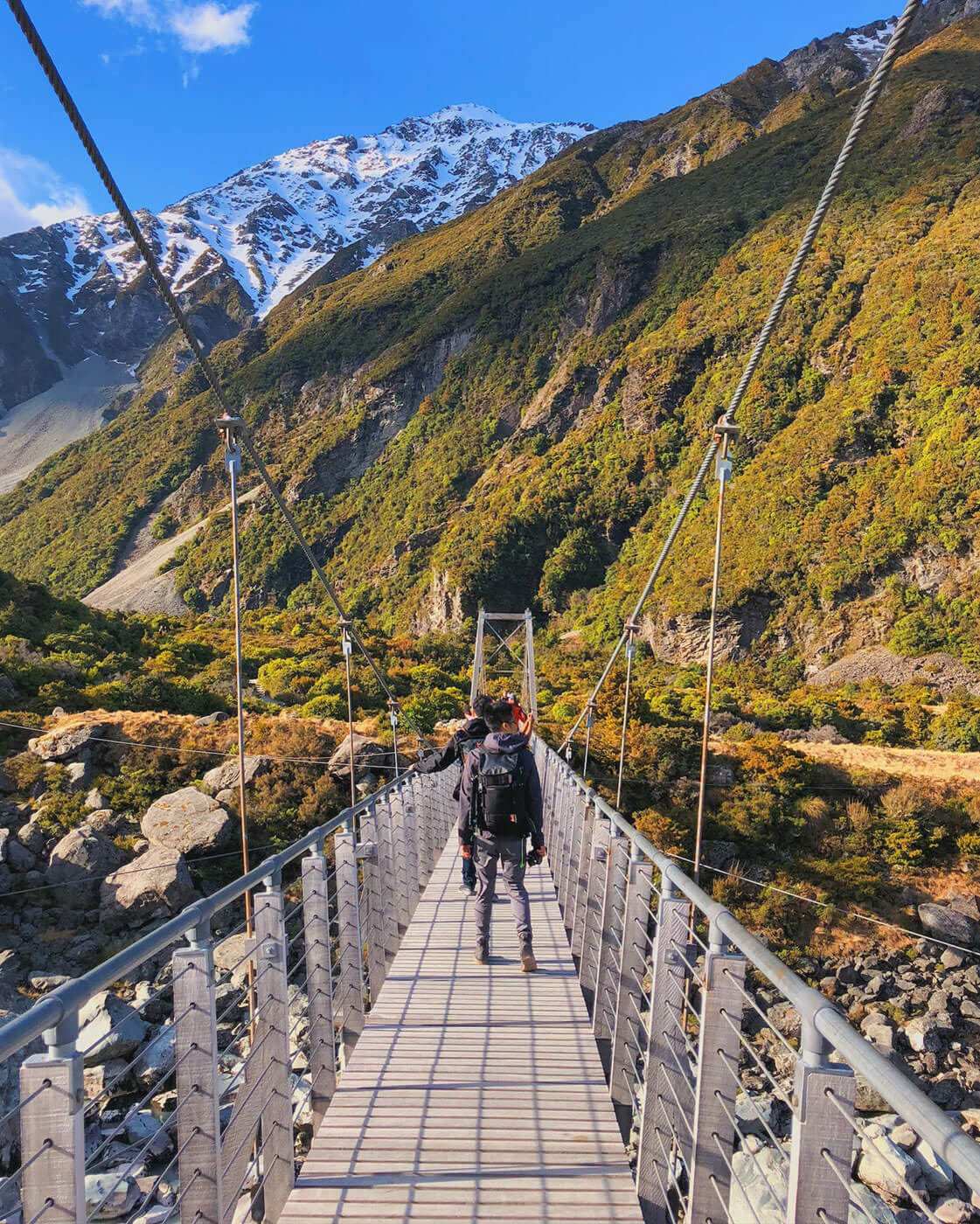
- Hooker Valley area
- Tasman Glacier viewpoints
- Shorter valley walks
- Scenic viewpoints
- Stargazing when conditions allow
Mountain weather can change quickly. DOC advises visitors to understand the weather, carry warm clothing and extra food, and change plans when conditions deteriorate.
Important first-timer advice
Do not treat a New Zealand hiking track like a city attraction.
Before leaving, check:
- Weather forecast
- Track conditions
- Daylight hours
- Your fitness level
- Required equipment
- Any closures or warnings
A shorter walk in good conditions is usually a better travel memory than an ambitious walk undertaken in unsuitable weather.
Days 12–14: Queenstown and Milford Sound
Day 12 — Aoraki/Mt Cook to Queenstown
Drive toward Queenstown.
This is another scenic travel day, so resist the urge to pack it with multiple paid activities.
Once you arrive, explore the lakefront and central Queenstown.
Queenstown is the natural base for the final section because it provides access to a wide range of activities as well as organised trips into Fiordland.
Overnight: Queenstown
Stay centrally if you want easy access to restaurants and evening activities.
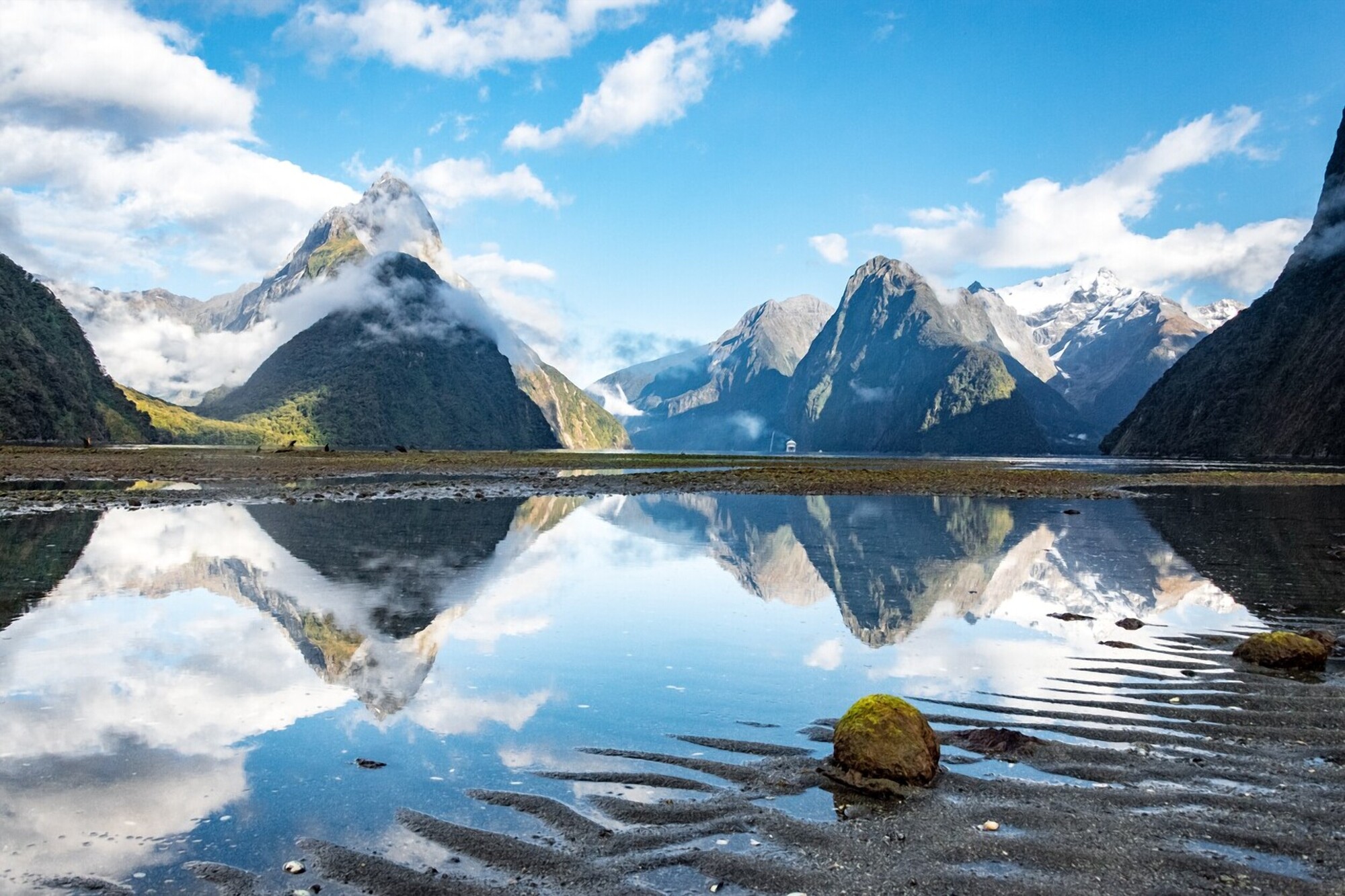
Day 13 — Milford Sound/Piopiotahi day trip
Make this your big final sightseeing day.
Milford Sound/Piopiotahi is one of the most popular experiences from Queenstown, and the Queenstown tourism organisation specifically recommends allowing time for a Milford Sound experience from the city.
For first-time visitors, an organised day trip is often the easiest option.
Option 1: Organised Milford Sound tour
Best for: First-time visitors who do not want to drive a long mountain route.
Advantages:
- Someone else handles the driving
- No need to navigate unfamiliar roads
- You can focus on the scenery
- Transport and cruise can often be combined
Option 2: Self-drive
Best for: Confident drivers who enjoy independent road trips.
The advantage is flexibility. You can stop at viewpoints along the route and set your own schedule.
The disadvantage is that it creates another demanding driving day, particularly if you are unfamiliar with New Zealand roads.
NZTA notes that New Zealand roads can be narrow, winding and steep and that distances can take longer to cover than expected.
Option 3: Overnight in Fiordland
If Milford Sound is one of the main reasons for your New Zealand trip, consider spending a night closer to Fiordland rather than returning to Queenstown.
However, this changes the itinerary and should be booked well in advance.
Day 14 — Queenstown and departure
Keep your final day flexible.
If your international flight departs from Queenstown, allow enough time to return the rental car and reach the airport.
If you have a late departure, spend your remaining hours around:
- Lake Wakatipu
- Queenstown Gardens
- Central Queenstown
- Skyline area
- A relaxed café or lunch
Avoid booking a major adventure activity immediately before an international flight.
Weather, road conditions and activity delays can happen, and the final day is not the time to create an unnecessary connection problem.
How to Travel Around New Zealand on This Itinerary
Should you rent a car?
For this particular route, a rental car is useful but not necessary for every day.
A practical arrangement is:
North Island: Rent a car after Auckland and return it in Wellington.
Between islands: Fly Wellington to Christchurch.
South Island: Rent another car from Christchurch and return it in Queenstown.
This gives you flexibility where it matters while avoiding the cost and inconvenience of keeping a car in cities.
If you don’t want to drive
You can build the same basic journey around:
- Domestic flights
- Intercity buses
- Organised tours
- Airport transfers
- Guided excursions
This is particularly attractive if driving on the left-hand side feels unfamiliar.
New Zealand driving tips for first-time visitors
New Zealand drives on the left-hand side of the road. NZTA also warns that roads can be narrow, winding and steep, and that travel times are often longer than they look on a map.
Before your first road trip:
- Check your rental company’s licence requirements.
- Confirm your overseas driving licence is valid for the vehicle you are renting.
- Learn New Zealand road signs and basic road rules.
- Keep left.
- Allow extra time for scenic roads.
- Take breaks on long drives.
- Never plan a demanding drive when you are exhausted.
- Check weather and road conditions before mountain journeys.
Do not plan your itinerary purely by kilometres. A 150-kilometre journey through mountainous terrain may take considerably longer than the same distance on a motorway.
What Should You Book Before Your Trip?
A two-week trip gives you little room for major booking mistakes.
Prioritise these first:
1. International flights
For a two-island itinerary, look at an open-jaw or multi-city flight arrangement if available: fly into Auckland and depart from Queenstown.
That avoids returning to Auckland simply to catch your international flight.
2. Accommodation
Book your main overnight stops before arrival, particularly during busy travel periods.
3. Domestic flight
Book the Wellington-to-Christchurch flight once your international itinerary is confirmed.
4. Rental cars
Reserve cars for both islands if you intend to drive.
5. Major tours
Book popular experiences such as Milford Sound cruises or guided activities ahead of time when your dates are fixed.
6. Great Walks and huts
If you want to replace some of the suggested walks with a multi-day Great Walk, check DOC’s booking system before building the itinerary around it. Great Walk accommodation can sell quickly, and DOC publishes seasonal opening dates and booking information.
For example, Milford Track bookings for the 2026/27 Great Walk season are open, with the season running from November through April.
Should You Add the Tongariro Alpine Crossing?
You can, but don’t add it automatically.
The Tongariro Alpine Crossing is a demanding alpine walk rather than a simple sightseeing attraction. DOC currently recommends bookings for visitors using the track, and shuttle or guided-walk services require a booking.
More importantly, conditions can change quickly. In March 2026, DOC took action after a transport operator carried visitors onto the crossing despite a hazardous weather warning.
If you want to include Tongariro, the easiest adjustment is:
Remove Taupō overnight sightseeing and use the area as your Tongariro base.
Then keep a backup plan for poor weather.
Do not build the entire itinerary around completing the crossing on one specific day.
Best Time of Year for This Two-Week Route
There is no single perfect season because New Zealand’s weather and your preferred activities matter more than a generic “best month.”
Summer
Good for: Longer daylight, hiking, road trips and outdoor activities.
Trade-off: Popular destinations can be busy and accommodation can be more competitive.
Autumn
Good for: Cooler temperatures, autumn colour and road-trip conditions.
Trade-off: Daylight decreases compared with summer.
Winter
Good for: Skiing, snow-covered mountain scenery and winter experiences.
Trade-off: Alpine roads and hiking conditions require more planning.
Spring
Good for: Fresh landscapes, waterfalls and increasing daylight.
Trade-off: Weather can be changeable, especially in alpine areas.
For outdoor days, check the forecast rather than assuming that a calendar date guarantees suitable conditions. DOC specifically advises checking forecasts and being prepared for rapid weather changes.
What About Visas, NZeTA and Entry Requirements?
Entry requirements depend on your passport and circumstances, so do not rely on an old blog post or another traveller’s experience.
Many travellers from visa-waiver countries can visit without applying for a visitor visa in advance, but they generally need an NZeTA before travelling. Immigration New Zealand states that visa-waiver travellers can normally stay for up to three months, with different provisions for UK citizens.
The NZeTA is not required for everyone. For example, Australian citizens travelling on Australian passports do not need one.
Before booking non-refundable travel:
- Check your passport’s requirements.
- Use Immigration New Zealand’s official visa/NZeTA checker.
- Apply for an NZeTA if required.
- Check passport validity.
- Confirm onward-travel requirements.
- Check requirements again shortly before departure.
The rules can change, so use the official Immigration New Zealand information rather than relying on a static itinerary article.
Don’t Forget New Zealand Biosecurity
One of the most important arrival tips for international visitors is New Zealand’s strict biosecurity system.
All travellers entering New Zealand must complete a New Zealand Traveller Declaration, and risk items such as food, plants, animal products, soil and used outdoor equipment need to be declared.
That includes outdoor equipment such as hiking footwear and camping gear.
Before flying to New Zealand
If you are bringing hiking boots:
- Clean off soil and plant material.
- Make sure they are easy to access for inspection.
- Declare them when required.
- If unsure, declare the item and ask an officer.
Failing to declare a biosecurity risk item can result in a NZD $400 instant fine.
This is a small preparation step that can prevent a very unpleasant arrival.
How Much Can You See in Two Weeks?
The honest answer is: a lot, but not everything.
This itinerary deliberately skips several famous destinations, including:
- Bay of Islands
- Coromandel
- Napier
- Nelson
- Abel Tasman
- Kaikōura
- West Coast glaciers
- Wanaka
- Dunedin
- Stewart Island/Rakiura
That is not a flaw.
Trying to include all of these in the same 14-day trip would turn the itinerary into a sequence of check-ins, car parks and hotel rooms.
Instead, choose a route based on what you want to experience.
If you love hiking
Reduce Auckland or Wellington and add another night around Aoraki/Mt Cook or Queenstown.
If you love Māori culture and geothermal landscapes
Keep both Rotorua nights and consider adding more time there.
If you love cities and food
Keep Auckland and Wellington at two nights each.
If mountains are your priority
Consider dropping Christchurch or Taupō and adding more South Island time.
If you dislike driving
Use organised tours and domestic flights more heavily.
A Slower Alternative: South Island Only
If two weeks feels too short for both islands, that instinct is reasonable.
A South Island-focused trip could look like:
Christchurch → Aoraki/Mt Cook → Wānaka → Queenstown → Milford Sound → Te Anau → Christchurch
The advantage is more time for landscapes, hiking and scenic drives.
The disadvantage is that you miss Auckland, Rotorua, Wellington and much of the North Island.
For a traveller whose priority is mountains and dramatic scenery, however, a South Island itinerary may be more satisfying than trying to cover the whole country.
Common Mistakes on a New Zealand Two-Week Trip
1. Planning by distance instead of driving time
A map can make New Zealand appear much smaller than it feels from behind the wheel.
Build your schedule around realistic travel time, not just kilometres.
2. Changing hotels every night
Constant packing is tiring.
Where possible, stay two nights in destinations that have enough to explore.
3. Treating Milford Sound as a quick excursion
The journey itself is part of the experience.
Allow a full day from Queenstown if taking an organised excursion.
4. Scheduling difficult hikes without a weather backup
Mountain conditions can change quickly.
Have a shorter alternative ready. DOC recommends changing plans when weather conditions make a trip unsuitable.
5. Keeping one rental car for everything
A car sitting unused in Wellington or Auckland is not useful.
Use cars where they provide flexibility and public transport, flights or tours where they make more sense.
6. Booking too many activities
A two-week itinerary needs breathing room.
Leave some evenings free and avoid booking an expensive activity immediately before an important flight.
A Simple Booking Checklist
Use this checklist once your dates are confirmed:
- International flights booked
- Passport checked
- Visa/NZeTA requirements checked
- New Zealand Traveller Declaration information reviewed
- Auckland accommodation booked
- North Island rental car booked
- Rotorua accommodation booked
- Taupō accommodation booked
- Wellington accommodation booked
- Wellington–Christchurch flight booked
- Christchurch accommodation booked
- South Island rental car booked
- Aoraki/Mt Cook accommodation booked
- Queenstown accommodation booked
- Milford Sound experience booked
- Travel insurance arranged
- Weather and track conditions checked before outdoor activities
- Hiking/outdoor equipment cleaned before arrival
For more detailed advice on routes, transport and preparation, explore our New Zealand travel planning resources.
Frequently Asked Questions
Is two weeks enough for New Zealand?
Yes, two weeks is enough for a memorable first visit, but not enough to see the entire country. A well-paced itinerary should focus on a limited number of regions rather than trying to visit every major destination.
Can I visit both islands in two weeks?
Yes. The easiest approach is to fly between the North and South Islands rather than spending a large part of the holiday travelling by road and ferry. This itinerary uses Wellington to Christchurch as the inter-island flight.
What is the best way to travel around New Zealand for first-time visitors?
A combination of rental cars, domestic flights and organised tours works well. Renting a car gives you flexibility outside the major cities, while flying between the islands saves valuable holiday time.
Is a rental car necessary in New Zealand?
No, but it is particularly useful for scenic regions and national parks. You can use buses, flights and tours instead if you do not feel comfortable driving on New Zealand’s left-hand-side roads.
Should I visit Milford Sound from Queenstown?
For a first visit, a Queenstown-based Milford Sound day trip is a practical option. If Milford Sound is a major priority, consider staying closer to Fiordland to reduce the amount of travel involved.
What should I book in advance for a two-week New Zealand trip?
Prioritise international and domestic flights, accommodation, rental cars and popular tours. If you plan to do a Great Walk, check DOC’s seasonal booking information before committing to your itinerary because hut availability can be limited.
Final Takeaway
The best New Zealand 2 week itinerary is not the one with the most destinations. It is the one that gives you enough time to enjoy each region without spending every second moving between them.
For first-time visitors, the route of Auckland → Rotorua → Taupō → Wellington → Christchurch → Aoraki/Mt Cook → Queenstown → Milford Sound provides a strong introduction to the country’s contrasting landscapes and cultures.
The most important planning decision is to accept that you cannot see everything in 14 days. Fly between the islands, use rental cars selectively, leave flexibility around mountain weather, and choose a few experiences that genuinely matter to you.
If you have more than two weeks, the best improvement is usually adding nights, not simply adding destinations.
INTERNAL LINKING RECOMMENDATIONS
- Anchor text: first time visiting New Zealand
Suggested destination: First Time Visiting New Zealand: Everything You Need to Know
Reason: This is a highly relevant supporting guide covering the broader practical questions that arise before following a first-time New Zealand itinerary. The article is currently published on Hazeldene Lodge. - Anchor text: New Zealand travel planning
Suggested destination: Hazeldene Lodge’s relevant Travel Planning article/category
Reason: This provides a natural contextual link from itinerary planning to broader preparation resources. Verify the exact destination URL and preferred anchor before publishing.
[INTERNAL LINK OPPORTUNITY — VERIFY URL BEFORE PUBLISHING]
SOURCES
- Immigration New Zealand — Visa Waiver Visitor Visa / NZeTA
Supports current visa-waiver, NZeTA and visitor-entry information.
Immigration New Zealand — Visa Waiver Visitor Visa - Immigration New Zealand — Check if you need a visa or NZeTA
Supports the recommendation to verify entry requirements based on nationality and circumstances.
Immigration New Zealand — Visa and NZeTA checker - NZ Transport Agency Waka Kotahi — Visiting New Zealand
Supports information about driving on the left, road conditions and longer-than-expected travel times.
NZTA — Visiting New Zealand - Ministry for Primary Industries — Travelling to New Zealand
Supports biosecurity and New Zealand Traveller Declaration information.
MPI — Travelling to New Zealand - Department of Conservation — Land Safety Code
Supports outdoor safety, weather preparation and changing plans when conditions deteriorate.
DOC — Land Safety Code - Department of Conservation — Tongariro Alpine Crossing
Supports current booking, shuttle and track-planning information for the Tongariro Alpine Crossing.
DOC — Tongariro Alpine Crossing - Department of Conservation — Great Walk bookings
Supports current Great Walk booking information and seasonal booking dates.
DOC — Great Walk and accommodation bookings - Tourism New Zealand — 8–14 day itineraries
Supports the broader feasibility of 8–14-day New Zealand itineraries and the range of itinerary styles available.
Tourism New Zealand — 8–14 day itineraries